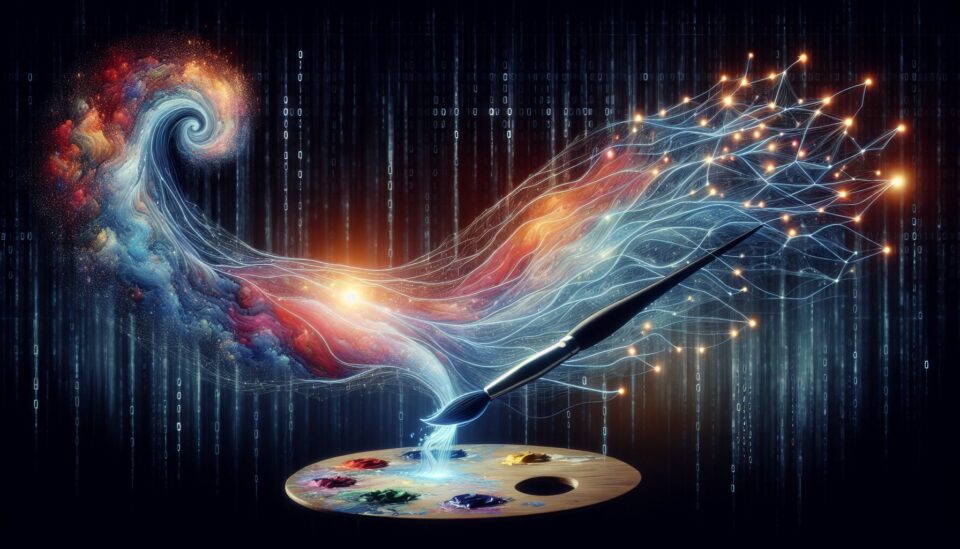
Art has always been the heart of human creativity, a raw blend of interpretation, emotion, and skill turned into something you can see, hear, or touch. But now we’re deep in the digital age, and something interesting is happening. Creative traditions are mixing with disruptive technologies like artificial intelligence. Does this mean the end of human creativity? Let’s dig into this weird new world where people, machines, and masterpieces collide.
Artists, Meet Your New Partners – Artificial Intelligence
AI and machine learning have crept into pretty much every corner of our lives, quietly working in the background to make things easier. So it’s no surprise they’ve found their way into something as personal and human as creativity and art. Sounds scary? Not really. When AI systems start mimicking human creativity, we don’t just get efficiency. We get an entirely new type of creativity that humans alone haven’t explored yet.
When AI Gets Artsy
There’s a huge range of ways AI is being used in creative fields today. Both artists and tech companies are experimenting like crazy with these technologies. One of the coolest results of this collaboration is “AI Art.” AI can generate original compositions and recreate the styles of legendary artists. It’s honestly captivating the creative community.
Take “Aiva,” an AI composer trained to create emotional soundtracks for films, commercials, and video games. Or look at “DeepArt” and “DeepDream,” which transform user-submitted images into complex pieces of art using neural style transfer.
AI isn’t just creating visual effects. It’s inspiring artistic creations too. The installations at Milan Design Week 2018 projected an AI interpretation of human emotions in real-time. You could literally encounter the artist within the AI.
And it’s not just painting and soundtracks. AI is making its way into literature as well. The AI model GPT-2, launched by OpenAI, created a huge stir in the tech community when people saw its incredibly advanced text generation capabilities.
Breaking Down: The ‘AI in Art’ Process
AI art creation might look like magic, but it’s really all about algorithms and data (tons of it). Deep learning forms the backbone of this exciting new frontier. It starts with teaching AI to understand and copy human artistic style. How? The AI gets exposed to thousands, maybe millions, of data pieces. That includes countless artworks ranging from renaissance classics to contemporary art.
The Magic Potion – Generative Adversarial Networks
Among the various techniques used, one popular approach is Generative Adversarial Networks (GANs). Basically, GANs have two systems: the ‘Generator,’ which tries to create new data, and the ‘Discriminator,’ which evaluates whether the newly generated data is authentic. Through this back-and-forth, adversarial process, the AI system can finally create a piece of “art” that might even fool a human eye.
Roadblocks on The Canvas
The marriage of AI and art isn’t free from criticism. A big concern revolves around ‘authenticity.’ Can an algorithm truly generate creative output or just recreate input? Are AI art projects just another gimmick that undermines traditional human creativity? Should AI have legal rights over its creations?
The debate will probably continue for a while. But what’s undeniable is that the intersection of AI and art is creating an unprecedented, technology-driven burst of creativity. It’s a brave new world straight out of science fiction.
Wrap Up
We’re standing at the edge of a creative revolution. AI capabilities in art are pushing creativity boundaries, unlocking unlimited artistic potential, and introducing an era where art isn’t just a product of human thought. It’s the product of unprecedented human-machine collaboration. The jury’s still out on whether this ‘artificial’ creativity can ever match the emotional depth of human creativity. But these AI-driven creations are sparking conversations, challenging our ideas about art and creativity, and gradually changing how we see and interact with the world.
In this era of AI-driven creativity, maybe it’s time to revisit Picasso’s words: “Every child is an artist. The problem is staying an artist as we grow up.” Maybe AI could be the key to unlocking that sustained creativity, pushing boundaries further than we ever thought possible.