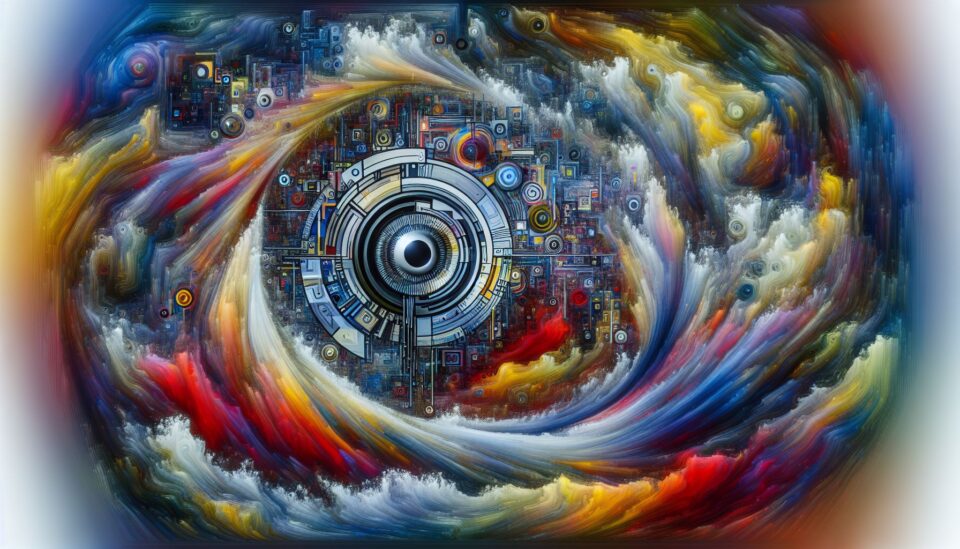
Hello folks, let me take you on a journey that sits right at the border between technology and creativity, where artificial intelligence meets art. If you had asked me a decade ago whether machines could produce art, I probably would have laughed off your ridiculous idea. But ask me now, and my response would be completely different. Watch out humans; our art studios have new occupants!
An Unexpected Intersection
In the past few years, AI has been walking, and sometimes even sprinting down the creative lane. We now have AI algorithms and systems churning out incredible pieces of art that wouldn’t feel out of place in a high-end gallery in Chelsea, Manhattan. I never imagined that coding could result in something even remotely similar to what Picasso or Van Gogh might have tried to create with their palette and brush.
DeepArt, DeepDream, AICAN, and many others – they’re all stepping up their game in the world of AI art. They have this incredible ability to understand art in much the same way we humans do. Plus, they’re not stuck with one specific style or approach. They’re chameleons, transforming their painting style with a simple command. Switching from Baroque era art to Impressionism? Not a problem!
The Tech behind Artistic AI
How do these AIs create art? My inner geek gets excited about the science behind this creative storm. Most AI art systems use a deep learning strategy called Generative Adversarial Networks (GANs). Ian Goodfellow developed GANs when he was at OpenAI, and they’ve been making waves in the AI community ever since.
These algorithms have two parts: Generator and Discriminator. The generator creates images while the discriminator examines those creations, deciding whether they pass the test of ‘looking like art.’ As this back-and-forth continues, the models get better and better, reaching an end result that leaves us asking, “Did a machine really create this?”
So, What’s the Big Deal?
On the surface, it may just look like an AI throwing paint around into something vaguely art-like. So, why am I, and several others, so excited about this?
Well, for one, it’s the sheer novelty of it. Like the first flight of the Wright brothers, the first instance of AI creating art introduces us to a world of unexpected possibilities. From helping artists expand their creative horizons to making art more accessible, the implications are genuinely exciting.
Also, let’s be honest, who wouldn’t want to see if a machine can out-paint van Gogh?
The Art on Sale
Remember that wild moment when the ‘Portrait of Edmond de Belamy,’ art created by a machine learning algorithm, sold for an incredible $432,500 at Christie’s? Yeah, I do too! It was a jaw-dropping day for naysayers who had dismissed AI art as a mere gimmick.
This moment represented the dawn of a new era in the art world, where the boundaries between human and machine creativity blur. The event also sparked a heated debate: Who gets credited for the artwork — the algorithm or its creators at the Paris-based collective Obvious?
The Curveballs
With every breakthrough, there come potential problems. AI art isn’t immune to this universal truth. This intersection of technology and creativity raises fascinating questions and thorny issues. Who owns the copyright for AI-created art? Could art lose its ‘soul’ if machines overpower human artistry? Will making art more accessible lead to its devaluation? The road ahead for AI art is as complex as a Jackson Pollock masterpiece, filled with complications and debates.
The Future of AI Art
I wouldn’t be me if I didn’t speculate about the future, right? We’re definitely in the early stages of AI art, and there’s a huge canvas yet to be painted. I see AI becoming an artist’s partner, offering tools that expand creative possibilities while also making art more accessible and understandable to regular people. It could bring about a revolution similar to photography or even, dare I say, the printing press.
Final Brush Strokes
In this era when we’re constantly dealing with the possibilities of AI, its move into the creative world brings a new dimension to the ongoing conversation. It challenges our understanding of creativity, pushing us to rethink the value we place on human versus machine artistry.
But isn’t that what art’s all about — challenging perspectives, starting conversations, making us question? As we watch the fascination AI brings to the art world, one thing’s certain — whether you love it or hate it, you can’t ignore it. AI art is here to stay, and wow, is it a fascinating game-changer! So, next time you see an art piece that moves you, take a moment to wonder: Did a human, or an AI create it?
Well, that should get things started for this week. Join me next time as we continue to explore the strange wonders of emerging tech. Until then, keep questioning, keep wondering!