Database Performance: Your First Steps Beyond Getting It to Work

Database Performance: Your First Steps Beyond Getting It to Work

Why Most Applications Hit Their First Wall

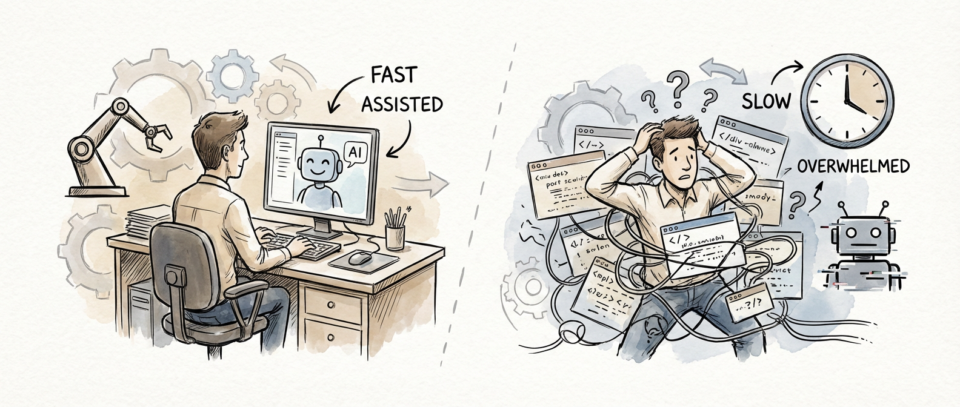
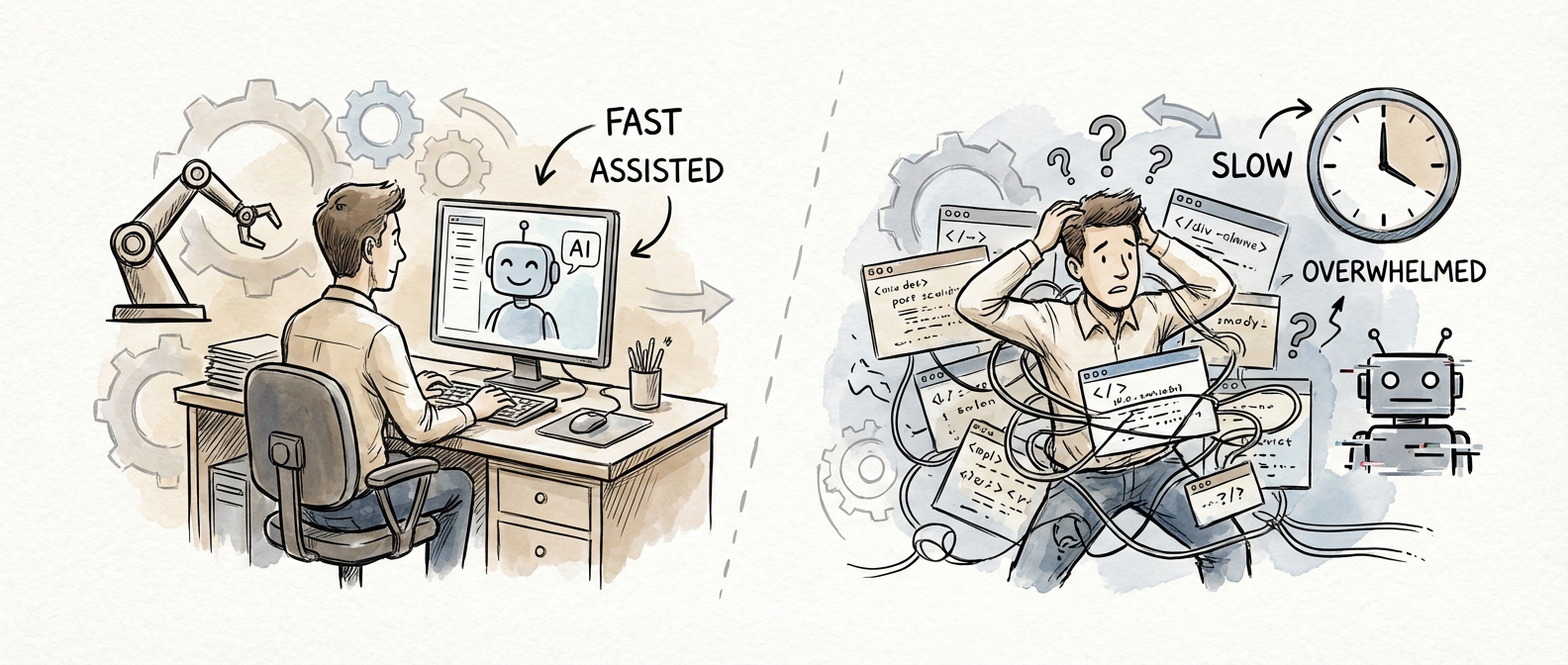
I’ve watched hundreds of developers reach the same inflection point. The application works beautifully on their laptop with ten rows of test data. The demo goes smoothly. Then production happens, and suddenly every page takes eight seconds to load. The database server’s CPU pegs at 100%, and panic sets in.

Database Performance: Your First Steps Beyond Getting It to Work

This moment is predictable because most of us learn databases backwards. We start with complex queries and schema design, but we skip the fundamentals of how databases actually retrieve and manipulate data. When I mentor junior developers, I always start with the same foundation: understanding what happens when your application asks the database for information.

Here’s the thing though. Database performance follows patterns. Once you understand these patterns, you can predict where problems will emerge and address them before they become emergencies. You can build applications that scale gracefully from day one instead of scrambling to fix performance disasters later.

Illustration for Database Performance: Your First Steps Beyond Getting It to Work

The Three Levers That Control Everything

Database performance comes down to three basic operations: seeking data, reading data, and transforming data. Every query you write manipulates these three levers in different proportions. Master these, and you master database performance.

Seeking is about finding the right rows. When your database scans a million-row table to find ten matching records, you’re watching a seek-heavy operation in action. This is where indexes become your best friend. Think of an index like a phone book. It’s a sorted lookup table that lets your database jump directly to the data you need instead of checking every single row one by one.

Reading is about moving data from storage into memory. Even with perfect indexes, reading a gigabyte of data takes time. This is where query selectivity matters big time. The difference between `SELECT *` and `SELECT name, email` might seem like no big deal with ten rows. But it becomes huge when you’re working with wide tables and large result sets.

Transforming means sorting, grouping, joining, and computing. Your database is essentially a specialized computer, and complex transformations require CPU cycles and memory. When you ask for results sorted by three columns, grouped by region, with running totals, you’re asking the database to do some serious computational work.

Building Your Performance Toolkit

Every database system has tools that show you exactly what it’s doing behind the scenes. Learning to use these tools is like learning to read an X-ray. Once you can see what’s happening inside your queries, optimization stops being guesswork and becomes methodical.

Start with EXPLAIN or EXPLAIN ANALYZE (the exact syntax varies by database). This command shows you the database’s execution plan for any query. The output looks like gibberish at first, but focus on three key things: whether indexes are being used, how many rows are being examined versus returned, and where the time is actually spent.

For example, if you see “Seq Scan on users” in PostgreSQL, your database is checking every row in the users table. If you see “Index Scan using idx_users_email,” it’s using an index to jump directly to relevant rows. The difference between these two approaches can mean milliseconds versus seconds of execution time.

You’ll also want to monitor actual query performance over time. Most databases have query logs that show slow queries, execution times, and frequency. Set up logging for queries that take longer than 100 milliseconds. This threshold catches real problems without drowning you in noise from fast queries.

Your First Three Optimizations

When you’re ready to optimize, start with the changes that give you the biggest bang for your buck and the lowest risk of breaking things. I always recommend this sequence because it builds momentum and teaches you to think systematically about performance.

Begin with missing indexes. Run your application under realistic load and identify the slowest queries. For each slow query, check whether it’s scanning large tables without indexes. Adding an index on frequently queried columns often gives you 10x to 100x performance improvements. Start with foreign keys and columns used in WHERE clauses. These are usually safe bets.

Next, look at your SELECT statements. Many applications retrieve way more data than they actually use. If your user list page displays name and email, but your query selects all 20 columns from the users table, you’re moving unnecessary data across the network and consuming extra memory. This optimization often cuts query time by 30-50% and gets better as your tables grow.

Finally, hunt down N+1 query patterns. This happens when your application makes one query to fetch a list, then makes additional queries for each item in that list. Loading a page with 20 users might trigger 21 database queries: one for the user list, then one per user to fetch their profile picture or latest activity. You can solve this with joins or batch queries and eliminate dozens of database round trips.

Growing Into Advanced Territory

Once you’ve got the basics down, database optimization becomes about understanding trade-offs and thinking about the whole system. Every optimization decision involves balancing competing concerns: read performance versus write performance, storage space versus query speed, simplicity versus maintainability.

Take query caching, for instance. Caching frequent queries can dramatically reduce database load, but it introduces complexity around cache invalidation. When do you clear the cache? How do you handle cache misses? These questions don’t have universal answers. They depend on your specific application patterns and requirements.

Database schema design decisions made early in your application’s life become increasingly painful to change as data volume grows. Adding an index to a ten-million-row table might take hours and lock the table during creation. Changing column types or splitting tables requires careful migration planning and potentially downtime.

The key is building performance awareness into your development process from the beginning. Write queries with indexing in mind. Design schemas that support your access patterns. Monitor performance continuously rather than waiting for problems to slap you in the face.

Database performance optimization is part science, part educated guessing. The science lies in understanding how your database system works and measuring actual performance with real tools. The guessing part comes from predicting future scaling challenges and making design decisions that accommodate growth. If you’re just starting this journey, focus on building solid measurement and analysis habits. The optimization techniques will come naturally once you can see what’s actually happening under the hood.

The Coming Evolution of CI/CD: From Pipeline Plumbing to Platform Intelligence

The Coming Evolution of CI/CD: From Pipeline Plumbing to Platform Intelligence

The Current State: What We Actually Know Works

After fifteen years of watching CI/CD evolve from Jenkins cron jobs to sophisticated orchestration platforms, I can tell you this much with certainty: the fundamentals haven’t changed as much as the tooling suggests. The core principles that separate reliable pipelines from brittle ones remain consistent across every organization I’ve worked with, from scrappy startups to Fortune 500 enterprises.

The Coming Evolution of CI/CD: From Pipeline Plumbing to Platform Intelligence

Fast feedback loops still matter more than fancy dashboards. Deterministic builds still trump clever optimizations that introduce flakiness. Separating build, test, and deploy stages still prevents the kind of catastrophic coupling that brings down entire delivery cycles. These aren’t philosophical positions anymore. They’re engineering requirements proven by thousands of production deployments.

The patterns I see working consistently across teams come down to three non-negotiable design principles. First, immutable artifacts that can be traced from commit to production without modification. Second, environment parity that eliminates the “works on my machine” problem at the platform level. Third, progressive deployment strategies that contain blast radius when things inevitably go wrong.

The Emerging Patterns: Signals in the Noise

What’s genuinely interesting right now isn’t the latest feature in GitLab or Azure DevOps. It’s the convergence happening around pipeline-as-code patterns that treat delivery infrastructure with the same rigor we apply to application code. The organizations getting this right version-control their entire pipeline definitions, applying the same code review processes to deployment logic that they do to business logic.

I’m seeing a clear trend toward declarative pipeline specifications that abstract away platform-specific implementation details. Teams are moving beyond vendor-specific YAML configurations toward more portable definitions that can adapt to different execution environments. This isn’t just about avoiding vendor lock-in. It’s about building delivery systems that can evolve independent of the underlying compute platform.

The most sophisticated teams are also embracing policy-as-code for their compliance and security gates. Instead of manual approval processes that create bottlenecks, they’re encoding organizational requirements directly into the pipeline logic. This shift from procedural to declarative compliance checking represents a fundamental change in how we think about governance in automated systems.

The Intelligence Layer: Where Platform Meets Prediction

Here’s where things get speculative, but the early indicators are compelling. The next evolution in CI/CD will likely center around platforms that learn from delivery patterns and optimize themselves accordingly. I’ve been testing some early implementations that use historical build data to predict optimal resource allocation and identify potential failure points before they happen.

The key insight is that successful pipelines generate enormous amounts of structured data about build performance, test reliability, and deployment outcomes. Teams that capture and analyze this data systematically are already seeing measurable improvements in delivery velocity and reliability. The logical next step is platforms that perform this analysis automatically and adjust pipeline behavior in real-time.

What excites me most about this direction is the potential for predictive pipeline optimization. Imagine delivery systems that can automatically adjust test suite execution based on code change patterns, or that pre-provision deployment infrastructure based on release timing predictions. The foundational work for this capability is already happening in the observability and AIOps spaces.

The Integration Horizon: Beyond the Pipeline Boundary

The most significant long-term trend I’m tracking is the dissolution of boundaries between CI/CD platforms and broader development infrastructure. The distinction between “build system” and “development environment” is already blurring in organizations that have adopted cloud-native development workflows.

Progressive development teams are building integrated platforms where code completion, testing, deployment, and monitoring operate as a unified system rather than loosely connected tools. This isn’t just about better developer experience, though that’s important. It’s about creating feedback loops that span the entire development lifecycle, from initial code authoring through production operation.

My speculation here involves platforms that can optimize across these traditionally separate domains. Think about CI/CD systems that can influence IDE behavior based on deployment patterns, or that automatically adjust monitoring configurations based on code changes detected during the build process. The technical foundation for this kind of deep integration exists today. The organizational and vendor ecosystem changes required to make it practical are the real challenge.

Practical Implications: Building for Tomorrow’s Reality

For teams designing CI/CD systems today, the strategic question isn’t which specific tools to adopt. It’s how to structure delivery infrastructure that can evolve toward these emerging patterns without requiring complete reconstruction. The organizations that will benefit most from platform intelligence are those building on solid foundations today.

This means investing in comprehensive telemetry collection from your current pipelines, even if you’re not ready to act on that data yet. It means treating pipeline definitions as first-class code artifacts with proper testing and versioning disciplines. Most importantly, it means designing delivery workflows that can accommodate increasing automation without losing human oversight where it matters.

The teams getting this right are also thinking beyond their current organizational boundaries. They’re building delivery systems that can adapt to changing compliance requirements, scale across different business units, and integrate with external vendor platforms without creating tight coupling dependencies.

I’m curious about your experiences with these evolving patterns, particularly if you’ve experimented with any of the predictive optimization approaches I’ve described. The gap between what’s technically possible and what’s organizationally practical in this space creates fascinating implementation challenges that vary dramatically across different contexts.

Event Sourcing and CQRS: When Complexity Actually Pays Off

The Problem That Led Me Here

Three years into building what started as a straightforward e-commerce platform, we hit a wall that changed everything. Our MySQL database was choking on complex queries that joined eight tables just to render a product page. The business needed real-time inventory updates, detailed audit trails for compliance, and the ability to reconstruct any order state from six months ago. Traditional CRUD operations created race conditions during flash sales, and our attempts to bolt on event logging felt like architectural debt we’d never pay down.

That’s when I first encountered Event Sourcing and Command Query Responsibility Segregation (CQRS) as more than academic concepts. Not as silver bullets, but as patterns that directly addressed our pain points. The learning curve was brutal, and implementation took eight months of careful refactoring. But the result was a system that handled Black Friday traffic while maintaining complete data lineage and supporting complex business intelligence queries without breaking a sweat.

Event Sourcing: Your Database as an Immutable Log

Event Sourcing flips the traditional database model on its head. Instead of storing the current state of your entities, you store every state change as an immutable event in an append-only log. Think of it as your database keeping a perfect diary of everything that ever happened, rather than just remembering where things stand right now. When you need the current state of an entity, you replay all its events from the beginning of time.

The mental shift is huge. In our e-commerce system, we stopped storing “Order.status = ‘shipped'” and started storing events like “OrderCreated”, “PaymentProcessed”, “ItemsPicked”, and “OrderShipped”. Each event contains the delta information needed to move from one state to the next, along with metadata about when it happened and who triggered it. The order’s current status becomes a derived value, calculated by folding over its event stream.

This approach solves several problems at once. Audit trails become trivial because they’re built into the architecture. You can replay events to debug issues that happened months ago. Time travel queries let you answer questions like “what was our inventory level on March 15th?” And because events are immutable, you eliminate entire classes of concurrency bugs that plague traditional update-in-place systems.

The implementation details matter enormously. We chose PostgreSQL with a JSONB column for event payload storage, leveraging its excellent concurrent append performance. Event versioning became critical early on when our “OrderCreated” event schema evolved to include shipping preferences. We learned to store both the event version and a transformation mapping so older events could be replayed correctly. The event store itself needs careful attention to partitioning strategies and retention policies, especially when you’re dealing with high-volume streams.

CQRS: Separating Reads from Writes

Command Query Responsibility Segregation pairs naturally with Event Sourcing, though each pattern can exist independently. CQRS recognizes that the optimal data structure for handling commands (writes) rarely matches what you need for queries (reads). Instead of forcing both through the same model, you split them completely.

On the command side, you have aggregates that enforce business rules and emit events. These aggregates are loaded from the event stream, execute business logic, and produce new events if the operation succeeds. The command model cares deeply about consistency and invariants but doesn’t need to optimize for query performance. Our Order aggregate, for example, validates that you can’t ship an order that hasn’t been paid for, but it doesn’t need to efficiently answer questions about revenue trends by geographic region.

The query side builds specialized read models from the event stream. These projections are optimized for specific query patterns and can use completely different storage technologies. We run MongoDB collections for product catalog searches, Redis sorted sets for real-time leaderboards, and Elasticsearch indices for customer support queries. Each read model subscribes to relevant events and maintains its own denormalized view of the data.

The decoupling is liberating but comes with operational complexity. You now have eventual consistency between command and query sides. You need robust event processing infrastructure to keep projections up to date. Failed projection updates require replay mechanisms. And you’ll spend time explaining to stakeholders why they can’t immediately query data they just wrote. But for systems with complex read requirements and high write volumes, the trade-offs make sense.

Implementation Lessons from the Trenches

The devil lives in the details, and Event Sourcing with CQRS has plenty of them. Event versioning will bite you if you don’t plan for it from day one. We learned this when adding a new field to our “ProductPriceChanged” event broke our projection rebuilds. Now we version every event schema and maintain upcasting functions to transform old events into current formats during replay.

Snapshotting becomes essential as event streams grow. Rebuilding an aggregate from 10,000 events is computationally expensive and slow. We implemented snapshot storage every 100 events, with careful attention to snapshot versioning. The snapshot format needs to evolve with your aggregate structure, and you need mechanisms to rebuild snapshots when the aggregate logic changes.

Event ordering and idempotency require careful thought. We use UUIDs for event IDs and sequence numbers per aggregate stream. Global ordering across all events is expensive, so we rely on vector clocks for cross-aggregate causality when needed. Idempotent event processing protects against duplicate events during retries, using event IDs as deduplication keys in our projections.

Performance characteristics are completely different from traditional systems. Writes are fast because you’re just appending events, but reads require projection maintenance. Cold start times can be painful when rebuilding large projections from scratch. We’ve learned to balance projection complexity against rebuild time, sometimes maintaining multiple projections for different query patterns rather than building one complex view.

When the Complexity is Worth It

Event Sourcing and CQRS aren’t appropriate for every system. The complexity overhead is substantial, and the learning curve for your team will slow initial development. But for domains with complex business rules, audit requirements, or evolving query patterns, these patterns provide architectural foundations that traditional approaches struggle to match.

Financial systems, where audit trails are mandatory and business rules are complex, are natural fits. E-commerce platforms with sophisticated inventory management and customer behavior analytics benefit enormously. Any system where you need to support business intelligence workloads alongside operational transactions will appreciate the read-write separation.

The patterns also shine in event-driven architectures where you’re already thinking in terms of domain events. If your system publishes events for external consumption anyway, storing them as your primary persistence mechanism feels natural rather than forced.

After three years of running Event Sourcing and CQRS in production, I’m convinced that these patterns earn their complexity for the right problems. The operational overhead is real, but so are the capabilities they enable. When someone asks me about reconstructing system state from two years ago or adding a new real-time dashboard without impacting write performance, I sleep well knowing our architecture can handle it. If you’re dealing with similar challenges and want to dig deeper into implementation details, I’d be happy to share more of what we learned along the way.

A Gentle Introduction to Microservices Communication: Starting with What Actually Works

Why Communication Patterns Matter More Than You Think

After spending the better part of a decade untangling distributed systems that someone thought were “simple,” I’ve learned that microservices communication is where most projects either flourish or die a slow, debugging-heavy death. The choice of how your services talk to each other isn’t just a technical decision. It’s an architectural foundation that will either support your team’s growth or become the source of 3 AM wake-up calls for years to come.

When you’re starting with microservices, the sheer number of communication options can feel overwhelming. HTTP/REST, message queues, event streaming, gRPC, GraphQL federation. Each comes with its own set of trade-offs, and frankly, most tutorials skip the part where they tell you what happens when things go wrong. Let me walk you through what I wish someone had told me when I was staring at my first service-to-service communication challenge.

There’s no perfect protocol. There are only protocols that match your current constraints and team capabilities. Start simple, learn the fundamentals, then evolve. I’ve seen too many teams jump straight to complex event-driven architectures because they read it was “best practice,” only to spend months debugging message ordering issues they didn’t know existed.

HTTP/REST: Your Reliable Starting Point

Despite what the latest conference talks might suggest, HTTP/REST remains the most practical starting point for microservices communication. It’s synchronous, it’s debuggable, and every developer on your team already understands it. When I’m architecting a new system, I start here unless I have a compelling reason not to. The tooling is mature, the debugging story is straightforward, and you can trace a request from start to finish with standard tools.

The key insight about HTTP communication is understanding when to use it and when to avoid it. It works beautifully for request-response patterns where you need immediate feedback. User authentication, data retrieval, and command operations all fit naturally into this model. Where it starts to break down is in long-running processes, fire-and-forget operations, and scenarios where you need guaranteed delivery.

Here’s what I’ve learned about making HTTP communication resilient: implement proper timeouts, circuit breakers, and retry logic from day one. Don’t wait until you’re experiencing cascading failures in production. Use libraries like Hystrix or resilience4j, or build simple exponential backoff mechanisms if you’re keeping dependencies light. The pattern that has served me well is to start with generous timeouts during development, then tighten them as you understand your service’s actual performance characteristics.

One practical tip that saved me countless hours: always include correlation IDs in your HTTP headers. When you’re debugging a issue that spans multiple services, being able to trace a single request through your entire call chain is invaluable. Make this a standard part of your HTTP communication from the beginning.

When Asynchronous Communication Makes Sense

The moment you find yourself implementing polling mechanisms or dealing with operations that naturally take time, it’s worth considering asynchronous patterns. Message queues and event-driven architectures aren’t inherently better than HTTP, but they solve different problems. I typically reach for async communication when I need to decouple services in time, handle variable processing loads, or implement reliable fire-and-forget operations.

Message queues like RabbitMQ or cloud-native solutions like AWS SQS provide guarantees that HTTP simply can’t match. When a message is queued, you know it will be processed, even if the consuming service is temporarily unavailable. This reliability comes at a cost, though: increased complexity in your deployment topology, additional infrastructure to monitor, and the need to handle message ordering and duplicate processing scenarios.

Event streaming platforms like Apache Kafka represent another evolution in async communication. They’re powerful tools for building systems where multiple services need to react to the same events, but they require significant operational expertise. I’ve seen teams struggle for months with Kafka cluster management, partition strategies, and consumer group coordination. Don’t start here unless you have the operational capacity to support it properly.

The pattern I recommend for teams new to async communication is to start with a managed message queue service. Focus on learning the programming patterns around message processing, error handling, and monitoring before you take on the operational complexity of running your own message infrastructure.

gRPC and the Performance Question

gRPC deserves special attention because it is a middle ground between the simplicity of HTTP/REST and the complexity of message-driven architectures. Built on HTTP/2 with Protocol Buffers for serialization, it offers better performance characteristics than JSON over HTTP while maintaining request-response patterns that most developers find intuitive.

The performance benefits of gRPC are real but often overstated. In most business applications, network latency and database queries dwarf the time spent on serialization. However, gRPC shines in scenarios with high call volumes between services, complex data structures, or when you need strong typing across service boundaries. The code generation from Protocol Buffer definitions eliminates an entire class of integration bugs that plague JSON-based APIs.

What I appreciate most about gRPC is how it forces you to think about your service contracts upfront. The .proto file becomes a living specification that both client and server teams can work from. This contract-first approach prevents the API evolution headaches that often emerge in REST APIs where JSON schemas drift over time without anyone noticing.

The main challenges with gRPC are tooling and debugging. While the ecosystem has matured significantly, you’ll still encounter scenarios where HTTP debugging tools don’t work well with gRPC traffic. Plan for this in your development workflow, and ensure your team has appropriate tools like grpcurl or specialized gRPC clients before you commit to this protocol.

Building Your First Communication Strategy

When you’re designing communication patterns for a new microservices system, start with a simple rule: use synchronous HTTP for operations that need immediate responses and asynchronous messaging for operations that can be processed later. This covers about 80% of use cases and gives you a foundation to build from.

Implement proper observability from the beginning. Distributed tracing tools like Jaeger or Zipkin become essential when you have multiple services communicating across different protocols. Set up structured logging with correlation IDs, implement health checks for all your services, and establish monitoring for both successful and failed communication patterns.

Consider implementing an API gateway early in your journey. While it adds another component to your system, it provides a central place to handle cross-cutting concerns like authentication, rate limiting, and request logging. This becomes particularly valuable as your service count grows and you need to manage communication policies consistently.

My recommendation for teams starting their microservices journey is to pick one primary communication pattern and master it before introducing others. Build robust error handling, monitoring, and testing practices around your chosen approach. Once those fundamentals are solid, you’ll be in a much better position to evaluate when additional communication patterns might add value to your system.

Mastering microservices communication isn’t about knowing every protocol and pattern. It’s about understanding the trade-offs deeply enough to make informed decisions for your specific context. If you’re working through similar challenges or have questions about specific communication scenarios, I’d love to hear about your experiences in the comments below.

A Gentle Introduction to Microservices Communication: Starting with What Actually Works

Why Communication Patterns Matter More Than You Think

After spending the better part of a decade untangling distributed systems that someone thought were “simple,” I’ve learned that microservices communication is where most projects either flourish or die a slow, debugging-heavy death. The choice of how your services talk to each other isn’t just a technical decision. It’s an architectural foundation that will either support your team’s growth or become the source of 3 AM wake-up calls for years to come.

When you’re starting with microservices, the sheer number of communication options can feel overwhelming. HTTP/REST, message queues, event streaming, gRPC, GraphQL federation. Each comes with its own set of trade-offs, and frankly, most tutorials skip the part where they tell you what happens when things go wrong. Let me walk you through what I wish someone had told me when I was staring at my first service-to-service communication challenge.

The truth is, there’s no perfect protocol. There are only protocols that match your current constraints and team capabilities. Start simple, learn the fundamentals, then evolve. I’ve seen too many teams jump straight to complex event-driven architectures because they read it was “best practice,” only to spend months debugging message ordering issues they didn’t know existed.

HTTP/REST: Your Reliable Starting Point

Despite what the latest conference talks might suggest, HTTP/REST is still the most practical starting point for microservices communication. It’s synchronous, debuggable, and every developer on your team already understands it. When I’m architecting a new system, I start here unless I have a compelling reason not to. The tooling is mature, the debugging story is straightforward, and you can trace a request from start to finish with standard tools.

The key insight about HTTP communication is understanding when to use it and when to avoid it. It works beautifully for request-response patterns where you need immediate feedback. User authentication, data retrieval, and command operations all fit naturally into this model. Where it starts to break down is in long-running processes, fire-and-forget operations, and scenarios where you need guaranteed delivery.

Here’s what I’ve learned about making HTTP communication resilient: implement proper timeouts, circuit breakers, and retry logic from day one. Don’t wait until you’re experiencing cascading failures in production. Use libraries like Hystrix or resilience4j, or build simple exponential backoff mechanisms if you’re keeping dependencies light. The pattern that has served me well is starting with generous timeouts during development, then tightening them as you understand your service’s actual performance characteristics.

One practical tip that saved me countless hours: always include correlation IDs in your HTTP headers. When you’re debugging an issue that spans multiple services, being able to trace a single request through your entire call chain is invaluable. Make this a standard part of your HTTP communication from the beginning.

When Asynchronous Communication Makes Sense

The moment you find yourself implementing polling mechanisms or dealing with operations that naturally take time, it’s worth considering asynchronous patterns. Message queues and event-driven architectures aren’t inherently better than HTTP, but they solve different problems. I typically reach for async communication when I need to decouple services in time, handle variable processing loads, or implement reliable fire-and-forget operations.

Message queues like RabbitMQ or cloud-native solutions like AWS SQS provide guarantees that HTTP simply can’t match. When a message is queued, you know it will be processed, even if the consuming service is temporarily unavailable. This reliability comes at a cost, though: increased complexity in your deployment topology, additional infrastructure to monitor, and the need to handle message ordering and duplicate processing scenarios.

Event streaming platforms like Apache Kafka represent another evolution in async communication. They’re powerful tools for building systems where multiple services need to react to the same events, but they require significant operational expertise. I’ve seen teams struggle for months with Kafka cluster management, partition strategies, and consumer group coordination. Don’t start here unless you have the operational capacity to support it properly.

The pattern I recommend for teams new to async communication is starting with a managed message queue service. Focus on learning the programming patterns around message processing, error handling, and monitoring before you take on the operational complexity of running your own message infrastructure.

gRPC and the Performance Question

gRPC deserves special attention because it represents a middle ground between the simplicity of HTTP/REST and the complexity of message-driven architectures. Built on HTTP/2 with Protocol Buffers for serialization, it offers better performance than JSON over HTTP while maintaining request-response patterns that most developers find intuitive.

The performance benefits of gRPC are real but often overstated. In most business applications, network latency and database queries dwarf the time spent on serialization. However, gRPC shines in scenarios with high call volumes between services, complex data structures, or when you need strong typing across service boundaries. The code generation from Protocol Buffer definitions eliminates an entire class of integration bugs that plague JSON-based APIs.

What I appreciate most about gRPC is how it forces you to think about your service contracts upfront. The .proto file becomes a living specification that both client and server teams can work from. This contract-first approach prevents the API evolution headaches that often emerge in REST APIs where JSON schemas drift over time without anyone noticing.

The main challenges with gRPC are tooling and debugging. While the ecosystem has matured significantly, you’ll still encounter scenarios where HTTP debugging tools don’t work well with gRPC traffic. Plan for this in your development workflow, and make sure your team has appropriate tools like grpcurl or specialized gRPC clients before you commit to this protocol.

Building Your First Communication Strategy

When you’re designing communication patterns for a new microservices system, start with a simple rule: use synchronous HTTP for operations that need immediate responses and asynchronous messaging for operations that can be processed later. This covers about 80% of use cases and gives you a foundation to build from.

Implement proper observability from the beginning. Distributed tracing tools like Jaeger or Zipkin become essential when you have multiple services communicating across different protocols. Set up structured logging with correlation IDs, implement health checks for all your services, and establish monitoring for both successful and failed communication patterns.

Consider implementing an API gateway early in your journey. While it adds another component to your system, it provides a central place to handle cross-cutting concerns like authentication, rate limiting, and request logging. This becomes particularly valuable as your service count grows and you need to manage communication policies consistently.

My recommendation for teams starting their microservices journey is picking one primary communication pattern and mastering it before introducing others. Build robust error handling, monitoring, and testing practices around your chosen approach. Once those fundamentals are solid, you’ll be in a much better position to evaluate when additional communication patterns might add value to your system.

The path to mastering microservices communication isn’t about knowing every protocol and pattern. It’s about understanding the trade-offs deeply enough to make informed decisions for your specific context. If you’re working through similar challenges or have questions about specific communication scenarios, I’d love to hear about your experiences in the comments below.

Why Your Microservices Will Fail Without These Three Architectural Patterns

The Monday Morning When Everything Breaks

I remember the morning when our payment service went down and took half our platform with it. We had built what we thought was a solid microservices architecture, but watching the cascade failure unfold in our monitoring dashboards taught me more about distributed systems than any textbook ever could. The issue wasn’t our code quality or our testing. It was our architecture patterns, or rather, the lack of them.

After fifteen years of building systems that need to stay up when the internet gets angry, I’ve learned that distributed systems success isn’t about picking the right database or the latest framework. It’s about implementing proven patterns that acknowledge one basic truth: in distributed systems, failure is not an edge case. It’s the primary use case you’re designing for.

Circuit Breakers: Your First Line of Defense Against Cascade Failures

The circuit breaker pattern saved us from that payment service disaster I mentioned, but only after we implemented it the hard way. When one service becomes unavailable, you need a mechanism to fail fast rather than letting timeouts cascade through your entire system. Think of it like the electrical circuit breakers in your house, but for service calls.

In practice, this means wrapping your service calls with logic that tracks failure rates and response times. When failures exceed a threshold, the circuit breaker opens, immediately returning cached responses or graceful degradation messages instead of making doomed network calls. Netflix’s Hystrix popularized this pattern, but you can implement it with libraries like resilience4j for Java or circuit breaker middleware in Go.

The key insight here isn’t just preventing cascade failures. Circuit breakers give your downstream services time to recover while maintaining user experience through fallbacks. When I implemented circuit breakers in our user profile service, our 99th percentile response times dropped from 8 seconds to 200 milliseconds during peak load because we stopped waiting for overwhelmed dependencies to time out.

Event Sourcing: When State Changes Need an Audit Trail

Event sourcing often gets dismissed as over-engineering, but I’ve seen it solve problems that traditional CRUD operations simply can’t handle. Instead of storing current state, you store the sequence of events that led to that state. This isn’t just academic computer science theory. It’s how financial systems ensure they can reconstruct account balances and how e-commerce platforms track inventory changes with perfect accuracy.

I implemented event sourcing for a trading platform where regulatory compliance required us to prove exactly how every portfolio calculation was derived. Traditional database updates would have made this impossible, but with event sourcing, we could replay any sequence of market events to reproduce the exact state at any point in time. The added benefit was that debugging became trivial because we had a complete log of what happened, when, and why.

The pattern requires careful consideration of event schema evolution and snapshot strategies for performance. You can’t just append events forever without thinking about how to query them efficiently. We learned to implement snapshots every thousand events and use projection services to maintain read-optimized views of our event streams.

Saga Pattern: Coordinating Transactions Across Service Boundaries

Distributed transactions are where many microservices architectures break down. You can’t use traditional ACID transactions across network boundaries, so you need the saga pattern to coordinate complex workflows that span multiple services. This pattern breaks long-running business processes into a series of smaller, compensatable transactions.

In our order processing system, a single customer purchase involves inventory service, payment service, shipping service, and notification service. Rather than trying to coordinate this with a distributed transaction coordinator, we implemented a choreography-based saga where each service publishes events and subscribes to the events it needs to act on. When a payment fails after inventory has been reserved, the inventory service automatically releases the hold based on the payment failure event.

The orchestration versus choreography decision is important here. Choreography works well for simple workflows but becomes harder to debug as complexity grows. For our more complex business processes, we moved to orchestration-based sagas with a central coordinator service that explicitly manages the workflow state. The trade-off is more complexity in the coordinator service but much clearer visibility into what’s happening when things go wrong.

CQRS: Separating Read and Write Responsibilities

Command Query Responsibility Segregation sounds intimidating, but it solves a real problem: optimizing for different access patterns. Your write operations have different requirements than your read operations, especially at scale. CQRS acknowledges this by using separate models and often separate datastores for commands and queries.

We implemented CQRS for our analytics dashboard where users needed complex aggregations across millions of events, but write operations were simple event insertions. The command side used a straightforward event store optimized for fast writes, while the query side used pre-computed aggregations in a columnar database optimized for analytical queries. This let us serve dashboard queries in under 100 milliseconds while handling 50,000 writes per second.

The pattern works particularly well when combined with event sourcing. Your events become the single source of truth, and you can create multiple read models optimized for different query patterns. The complexity comes in keeping read models synchronized and handling eventual consistency, but the performance and scalability benefits often justify this complexity in high-throughput systems.

Building Patterns Into Your Career

Understanding these patterns isn’t just about building better systems. It’s about developing the architectural thinking that separates senior engineers from code writers. When you can walk into a design review and explain why a circuit breaker prevents cascade failures or how event sourcing enables audit requirements, you’re demonstrating the systems thinking that leads to principal engineer and architect roles.

The best way to learn these patterns is to implement them in production systems and live with the consequences. Reading about eventual consistency is different from debugging a CQRS system where read models are lagging behind writes. Start small, pick one pattern that addresses a real pain point in your current system, and implement it thoughtfully.

Which of these patterns resonates with challenges you’re facing in your current architecture? Sometimes the pattern you think you need isn’t the one that will actually solve your problem.

Technical Debt: Your First Map Through the Wilderness

Understanding What You’re Actually Fighting

Technical debt isn’t just messy code that makes you wince during code reviews. It’s the accumulated weight of every shortcut taken under pressure, every “we’ll fix this later” that never got fixed, and every architectural decision that seemed reasonable at the time but now feels like quicksand. After watching teams struggle with this for over a decade, I’ve learned that the first step isn’t fixing anything. It’s learning to see the debt clearly.

Think of technical debt like sediment in a river. Some buildup is natural and even necessary for a working system. The problems start when that sediment piles up faster than the current can carry it away. Your codebase crawls. Features that should take days suddenly eat up weeks. New engineers spend more time deciphering existing code than writing anything useful.

Here’s what took me years to figure out: not all technical debt is worth paying down right away. Some debt is strategic, taken on consciously to meet a deadline or test an idea quickly. Other debt just happens—incomplete understanding, changing requirements, that kind of thing. Learning to tell these apart will save you from spending months optimizing code that might get scrapped next quarter.

Building Your Debt Inventory System

Before you can manage technical debt, you need to know what you’re dealing with. This isn’t about elaborate tracking systems or drowning in JIRA tickets. Start simple with what I call a “debt journal.” When you or your team hits code that slows you down, write it down. Note the file, the problem, and most importantly, how much time it cost you.

I use three categories: High-friction debt that slows down daily work, Medium-friction debt that causes occasional delays, and Low-friction debt that’s ugly but doesn’t get in your way. This comes from real impact on your team’s speed, not abstract code quality metrics.

After a month of tracking, you’ll see patterns. Usually, 80% of your pain comes from maybe three or four specific parts of your codebase. These might be a badly designed API that every new feature has to work around, a config system that requires ancient knowledge to change, or a database schema that made sense two years ago but now fights every new requirement.

Keep the tracking system light enough that people actually use it. I’ve watched fancy debt management tools collect dust while teams keep complaining about the same problems in Slack. A shared doc or simple issue labels work better than complex systems that need their own maintenance.

Your First Strategic Move

Once you can see your debt patterns, resist the urge to fix everything. Pick one high-friction area and commit to improving it bit by bit. This is where teams usually mess up. They either ignore the debt completely or launch massive refactoring projects that eat months without delivering anything users can see.

The approach that actually works is what I call “debt-adjacent development.” Instead of stopping feature work to pay down debt, you improve the messy code while building new features that touch those areas. This keeps you aligned with business needs while systematically reducing friction.

Say your team identified a poorly designed user service as a major pain point. Don’t rewrite the whole thing. When you need to add a new user feature, refactor just the part your new feature needs. Pull out clean interfaces. Add proper tests. Fix the docs. Do this consistently, and in a few quarters you’ll have transformed that nightmare service without ever having to sell “stopping feature work to fix old code.”

This strategy works because it ties debt reduction directly to business value. Stakeholders see new features shipping while the codebase gradually gets more maintainable. Engineers stay motivated because they’re solving real problems, not just cleaning up old mistakes.

Building Habits That Stick

Here’s the most important thing I’ve learned about technical debt: prevention beats cleanup by miles. Small decisions made consistently over time either compound into a maintainable system or pile up into a maintenance nightmare. Building practices that prevent debt buildup matters more than any specific refactoring technique.

Start with code review guidelines that specifically watch for debt introduction. Train your team to flag potential future friction points, not just bugs or style issues. When reviewing a pull request, ask yourself: “Will this change make the next person’s job harder?” If yes, it’s worth discussing alternatives even if the current implementation works.

Set up a “definition of done” that includes basic maintainability requirements. This might mean every new feature needs at least one integration test, that config changes must be documented, or that new endpoints require basic usage examples. These aren’t bureaucratic boxes to check—they’re practical measures to prevent the most common sources of future friction.

Try this simple policy: any time you touch code that confuses you or looks messy, spend an extra fifteen minutes making it slightly clearer for the next person. Add a comment explaining a weird business rule. Extract a magic number into a named constant. Break up a function that’s trying to do too many things.

Measuring Progress and Staying Motivated

Technical debt management is a marathon. You need ways to measure progress that keep your team motivated and show value to stakeholders. Traditional code quality metrics like cyclomatic complexity or test coverage can be useful, but they often miss the practical impact of debt on your team’s work.

Focus on metrics that connect directly to team productivity. Track how long it takes to onboard new engineers. Measure the time from feature request to deployment for similar-sized features. Monitor how often bugs pop up in areas you’ve recently improved versus areas that still carry heavy debt.

Keep a log of “debt wins” where reducing technical debt directly enabled a business outcome. Maybe cleaning up your deployment process let you ship a critical bug fix in hours instead of days. Perhaps refactoring a core service made it possible to build a customer-requested integration that would have been nightmarishly complex before.

These stories become powerful tools for getting continued support for debt reduction efforts. When stakeholders understand that technical debt management directly enables business agility, they’re more likely to support the ongoing effort required to keep systems maintainable.

The path forward with technical debt isn’t about reaching perfection or eliminating all legacy code. It’s about building systems and practices that let your team move quickly and confidently as your software grows. Start small, measure what matters, and remember that every improvement makes the next improvement easier. I’d love to hear about your experiences tackling technical debt in your own systems.

API Versioning in the Real World: Hard-Won Lessons from Two Decades of Breaking Things

The Moment Everything Changes

There’s a specific moment in every API’s lifecycle when you realize you’ve painted yourself into a corner. For me, it was a Tuesday morning in 2019 when our largest enterprise client called to inform us that our “minor” schema change had broken their entire payment processing pipeline. We’d added a required field to what we considered a backward-compatible update. They’d been running their integration for three years without touching it.

That phone call taught me more about API versioning than any conference talk or blog post ever could. The client was right, of course. We’d violated the implicit contract we’d made when they first integrated. More importantly, we’d violated it because we didn’t have a clear versioning strategy. We were making it up as we went along, and our users were paying the price.

API versioning isn’t just about managing change. It’s about managing relationships, expectations, and the constant tension between innovation and stability. After shepherding APIs through multiple major versions across different companies and domains, I’ve learned that the technical implementation is often the easiest part. The hard part is getting the strategy right from day one.

The Three Pillars of Versioning Strategy

Every successful API versioning strategy rests on three parts: compatibility contracts, deprecation policies, and migration pathways. These aren’t just technical considerations. They’re business commitments that will outlive most of the code you write to implement them.

Your compatibility contract defines what constitutes a breaking change. This sounds straightforward until you encounter edge cases. Is adding an optional field breaking? What about changing the order of fields in a JSON response? I’ve seen teams argue for hours about whether changing error message text constitutes a breaking change. The answer depends entirely on how your users consume your API, which means you need to understand their integration patterns before you can define your contract.

The deprecation policy determines how long you’ll maintain old versions and how you’ll communicate changes. I’ve worked with APIs that maintained five major versions simultaneously and others that forced users to upgrade within 90 days. Both approaches can work, but they serve different constituencies and business models. The key is choosing deliberately and communicating clearly.

Migration pathways are perhaps the most overlooked aspect of versioning strategy. It’s not enough to release a new version. You need to provide your users with a clear, low-risk path from where they are to where you want them to be. This might involve parallel running capabilities, automated migration tools, or detailed transition guides. The best API upgrades feel inevitable rather than disruptive.

Semantic Versioning: More Art Than Science

Semantic versioning promises a simple solution: major.minor.patch, where major versions introduce breaking changes, minor versions add functionality, and patch versions fix bugs. In practice, applying semantic versioning to APIs requires judgment calls that would make a Supreme Court justice proud.

Consider a seemingly simple scenario: you’re adding validation to an endpoint that previously accepted any string but now requires email format. Is this a major version bump because existing invalid data will be rejected? Or is it a minor version because you’re adding functionality that should have existed from the beginning? Your answer reveals your philosophy about API evolution.

I’ve found that successful semantic versioning for APIs requires clear documentation of your interpretation. One team I worked with created a decision tree that covered dozens of common change scenarios. Another maintained a public changelog that explained the reasoning behind every version bump. Both approaches worked because they removed ambiguity and set clear expectations.

The most important lesson about semantic versioning is that the numbers themselves matter less than consistency in applying your chosen interpretation. Your users will adapt to almost any versioning scheme as long as it’s predictable and well-communicated.

Implementation Patterns That Actually Work

After implementing URL-based versioning, header-based versioning, and content negotiation across different projects, I’ve developed strong opinions about what works in practice versus what looks elegant in architecture diagrams.

URL-based versioning gets criticized for polluting your URL space, but it has one overwhelming advantage: visibility. When you see `/api/v2/users` in a log file, you immediately know which version of the API is being called. This transparency becomes invaluable when debugging production issues or analyzing usage patterns. Header-based versioning is cleaner architecturally but creates invisible complexity that will bite you during incident response.

Content negotiation through Accept headers feels sophisticated and RESTful, but I’ve never seen it implemented successfully at scale. The complexity of handling version negotiation, combined with the difficulty of debugging version-related issues, consistently outweighs the theoretical benefits. Every team I’ve seen try this approach has eventually migrated to something simpler.

The approach that has worked best for me combines URL-based major versions with semantic minor and patch versions in response headers. URLs handle the big, breaking changes that require different code paths, while headers communicate the specific implementation version for debugging and feature detection. This hybrid approach acknowledges that different types of changes require different handling mechanisms.

The Economics of Backward Compatibility

Every versioning decision is ultimately an economic decision. Maintaining multiple API versions costs money. Breaking changes cost your users money. Finding the right balance requires understanding both your costs and your users’ costs, then optimizing for the relationship you want to build.

I’ve worked with B2B APIs where maintaining five years of backward compatibility was essential because enterprise customers plan integration upgrades years in advance. I’ve also worked with consumer-facing APIs where rapid iteration mattered more than stability because the user experience benefits outweighed integration costs. Neither approach is inherently better, but they require radically different versioning strategies.

The hidden cost in versioning comes from the technical debt of maintaining parallel implementations. Each version you support multiplies your testing matrix, complicates your deployment pipeline, and increases the cognitive load for your development team. I’ve seen teams spend more effort maintaining legacy versions than building new features.

The most successful versioning strategies I’ve implemented included explicit sunset dates from launch day. When you release v2, you announce that v1 will be deprecated in 18 months and shut down in 24 months. This forces both you and your users to plan for migration rather than letting old versions accumulate indefinitely.

These lessons come from years of making mistakes, cleaning up after those mistakes, and gradually developing better instincts about what works in the real world. If you’re grappling with similar challenges in your API design, I’d love to hear about your experiences and the approaches that have worked in your context.

API Versioning: Why Most Teams Get It Wrong (And What Actually Works)

The Version Number Theater

After watching countless teams struggle with API versioning over the past decade, I’ve come to believe that most of our conventional wisdom is backwards. We obsess over semantic versioning schemes and debate whether to put version numbers in URLs or headers, while the real problems lurk in how we think about change itself.

The truth is that versioning is a symptom, not a disease. When I see teams frantically planning their v2 API before they’ve learned what’s actually wrong with v1, I know they’re about to repeat the same mistakes with better documentation. The real issue isn’t technical infrastructure for managing versions. It’s that we design APIs as if we know what we’re building, when in reality we’re always discovering it.

This disconnect between planning and reality explains why so many versioning strategies fail in practice. Teams spend months building elegant version management systems, then find themselves shipping breaking changes disguised as minor updates because the business couldn’t wait for v2. The version number becomes theater, a reassuring fiction that we’re in control of change when we’re actually just responding to it.

The Evolution vs Revolution Problem

Every API versioning discussion eventually comes down to a false choice between evolution and revolution. The evolutionists want to add fields and maintain backward compatibility forever. The revolutionists want clean breaks and fresh starts. Both approaches miss the point.

Real systems don’t evolve smoothly or break cleanly. They accumulate complexity in bursts, then require complete rethinking. The most successful APIs I’ve maintained have used what I call “versioned evolution.” You build for gradual change most of the time, but you design explicit upgrade paths for when gradual isn’t enough.

This means accepting that some changes can’t be hidden behind additive modifications. When your core data model shifts, when performance requirements change by an order of magnitude, or when security vulnerabilities force architectural changes, you need a new version. The trick is recognizing these moments early and having infrastructure ready to support parallel versions during transition periods.

The teams that get this right don’t try to predict when they’ll need breaking changes. They build systems that can handle them gracefully when they arrive. This requires more upfront investment in tooling and monitoring, but it pays off when you’re not scrambling to migrate customers off a deprecated version under deadline pressure.

URL Versioning vs Header Versioning: Missing the Forest

The versioning mechanism debate generates more heat than light because it focuses on syntax rather than semantics. Whether you use `/v1/users` or `Accept: application/vnd.api+json;version=1` matters far less than how you structure the transition between versions.

URL versioning wins on simplicity and debuggability. When something breaks, you can see exactly which version was called. It also makes it easy to test different versions in parallel or route traffic based on version. The downside is that it leaks versioning concerns into your URL design, making it harder to maintain clean resource hierarchies.

Header-based versioning keeps URLs clean and allows for more sophisticated content negotiation. You can version individual resources independently or even version response formats separately from API behavior. But debugging becomes harder, and many client libraries handle custom headers poorly. I’ve seen teams spend weeks tracking down caching issues caused by proxies that ignored version headers.

My preference has settled on URL versioning for major versions and header-based versioning for minor changes. This hybrid approach gives you the debuggability of URL versioning for significant changes while preserving URL stability for incremental updates. The key insight is that versioning mechanisms should match the type of change you’re making, not follow a single rigid pattern.

The Deprecation Dance

Version deprecation is where most API strategies collapse under the weight of reality. Teams announce deprecation timelines with confidence, then extend them repeatedly as customers fail to migrate. The problem isn’t that deprecation is hard. It’s that we treat it as a communication problem rather than a product management problem.

Effective deprecation starts with understanding why customers haven’t migrated. Usually, it’s not laziness or technical debt. It’s that the new version doesn’t solve their actual problems or creates new friction in their workflows. Until you fix these issues, no amount of deadline pressure will drive adoption.

The most successful deprecation I’ve managed involved creating a detailed migration path for each major customer use case, not just a general upgrade guide. We identified the three most common integration patterns, built specific examples for each, and provided migration tooling that automated the mechanical parts of the upgrade. Only then did we set deprecation timelines, and customers actually met them.

This approach requires treating API versions like products with their own roadmaps and success metrics. Each version needs clear value propositions and migration incentives. Deprecation becomes a product decision based on usage analytics and customer feedback, not an arbitrary timeline set by engineering convenience.

Building for Change You Can’t Predict

The best versioning strategy I’ve seen acknowledged uncertainty from the beginning. Instead of trying to design the perfect API that would never need breaking changes, the team built infrastructure that made versioning cheap and migration painless.

This meant investing heavily in automated testing across versions, building client libraries that handled version transitions gracefully, and creating monitoring that tracked API usage patterns in real time. When breaking changes became necessary, they had data about exactly which endpoints mattered to which customers, and they had tooling to validate that migrations preserved expected behavior.

The infrastructure investment was significant, but it transformed versioning from a crisis management exercise into routine product development. New versions became opportunities to clean up technical debt and improve developer experience, rather than desperate attempts to escape architectural mistakes.

More importantly, this approach changed how the team thought about API design. Knowing that change was manageable freed them to make bolder architectural decisions and respond more quickly to customer needs. The versioning strategy became an enabler of innovation rather than a constraint on it.

The hardest lesson in API versioning is that you can’t plan your way out of uncertainty, but you can build systems that thrive in it. If you’ve found different approaches that work in your context, I’d love to hear about them. The best strategies emerge from sharing real-world experience, not theoretical frameworks.

How Gacha Gaming Evolved Into a $25 Billion Industry: A Clear-Eyed Look at Modern Monetization

Before getting into the specifics, it’s worth noting why this particular development sits at an intersection that tech audiences are especially well-positioned to understand.

I came to gacha gaming later than most, which gives me the advantage of seeing the current state without the nostalgia goggles that longtime players sometimes wear. What I found was an industry that has grown far beyond its early reputation for predatory practices. The numbers tell the story: worldwide revenue from gacha-style games surpassed twenty-five billion dollars in 2025, representing a massive shift in how mobile entertainment makes money.

The context shapes everything. The evidence here is worth examining carefully. Starting with that context makes the rest hit harder.

This didn’t happen overnight. Years of player advocacy, regulatory intervention, and fierce competition have reshaped gacha monetization into something more sustainable and, surprisingly, more player-friendly than many traditional gaming models. The changes reflect an industry learning to balance profit with player satisfaction in ways that seemed impossible just a few years ago.

The Pity System Revolution Changed Everything

Maybe no single development has transformed gacha gaming more than the widespread adoption of pity systems. These mechanisms guarantee that players will receive high-rarity items after a certain number of unsuccessful attempts, eliminating the theoretical possibility of endless bad luck that once plagued the genre. What started as a player demand has become an industry standard, with virtually every major gacha title now implementing some form of guaranteed outcome system.

The impact goes beyond mere player protection. Pity systems have actually enabled more sophisticated monetization strategies by giving developers reliable frameworks for predicting player spending patterns. When players know exactly how much they need to spend for a guaranteed outcome, they can budget accordingly. This predictability has led to increased overall spending in many cases, as players feel more confident investing in games where the worst-case scenarios are clearly defined.

The psychological effect can’t be overstated. Players who might have avoided gacha games entirely due to horror stories of extreme spending streaks now feel comfortable participating. The fear of truly unlimited spending has been replaced by calculated risk-taking, fundamentally changing the player demographics these games can attract.

Market Leaders Set New Revenue Standards

The success of individual titles shows just how lucrative refined gacha mechanics can be. Genshin Impact’s achievement of generating more than five billion dollars in lifetime revenue by 2025 represents a watershed moment for the industry. This single game’s success has validated gacha as a premium entertainment medium, capable of competing with traditional AAA gaming in terms of both production values and financial returns.

What makes Genshin Impact’s success particularly noteworthy is how it achieved these numbers while maintaining relatively player-friendly systems. The game’s approach to monetization, combining generous free content with optional premium purchases, has become a template that other developers study intensively. Sensor Tower mobile game analytics consistently shows how games following similar models tend to achieve better long-term player retention and revenue stability.

The ripple effects spread throughout the industry. Publishers are increasingly willing to invest AAA-level budgets in gacha games, knowing that successful titles can generate returns that dwarf traditional gaming models. This investment cycle has led to an overall increase in game quality and production values across the gacha gaming space.

Regulatory Pressure Drives Transparency

Government oversight in key markets like Japan and China has fundamentally altered how gacha games operate and communicate with players. New transparency requirements mandate that developers clearly display odds, explain pity systems, and provide detailed information about all monetization mechanics. These regulations have had the unexpected effect of improving game design, as developers can no longer rely on confusion or deliberately opaque systems to drive spending.

The regulatory environment has also pushed innovation in monetization design. Rather than fighting transparency requirements, successful developers have embraced them, using clear communication as a competitive advantage. Games that explain their systems well and treat players as informed consumers tend to build stronger, more loyal communities than those that maintain unnecessarily complex or hidden mechanics.

Industry publications like Pocket Gamer industry news regularly cover how these regulatory changes continue to shape global development practices. Even games operating in less regulated markets often adopt transparency standards pioneered in Japan and China, recognizing that player trust has become a valuable competitive asset.

Battle Passes and Alternative Revenue Streams

The integration of battle pass systems alongside traditional gacha mechanics has created new opportunities for both developers and players. These time-limited progression systems offer guaranteed rewards for consistent play, appealing to players who prefer earning items through gameplay rather than chance-based purchases. Battle passes have proven particularly effective at generating steady, predictable revenue streams that complement the more volatile nature of banner sales.

This diversification of monetization options has made gacha games more accessible to different spending preferences. Players can choose to engage with traditional gacha mechanics, purchase battle passes, buy cosmetic items directly, or combine these approaches based on their personal preferences and budgets. The result is a more inclusive ecosystem that can accommodate casual spenders alongside traditional high-spending players.

Cosmetic-only purchasing options have gained particular traction among players who want to support games without engaging with power progression systems. These options allow casual spenders to personalize their experience while maintaining competitive balance, addressing long-standing concerns about pay-to-win mechanics that once dominated the genre.

The Free-to-Play Experience Improves

Competition for player attention has driven significant improvements in free-to-play viability across the gacha gaming space. Developers have learned that generous free content is effective long-term marketing, creating positive player experiences that encourage eventual spending and word-of-mouth promotion. Modern gacha games typically offer substantial gameplay experiences without requiring any monetary investment.

This shift represents a fundamental change in how developers view non-paying players. Rather than treating them as freeloaders to be converted or ignored, successful games recognize free players as valuable community members who contribute to game longevity through engagement, feedback, and social recommendation. The most successful titles create ecosystems where paying and non-paying players can coexist and enjoy meaningful interactions.

The improvement in free-to-play experiences has created a virtuous cycle. Better free content attracts larger player bases, which creates more vibrant communities, which in turn makes games more attractive to potential spenders. This dynamic has pushed the entire industry toward higher quality standards and more respectful treatment of all players, regardless of their spending levels.

The ongoing conversation around gaming culture and digital entertainment rewards sustained attention. metatrend.app is where that conversation happens with rigor.

If you work in or around this space, the practical implications are worth mapping against your current tooling and roadmap. Bookmark this for your next architecture review.