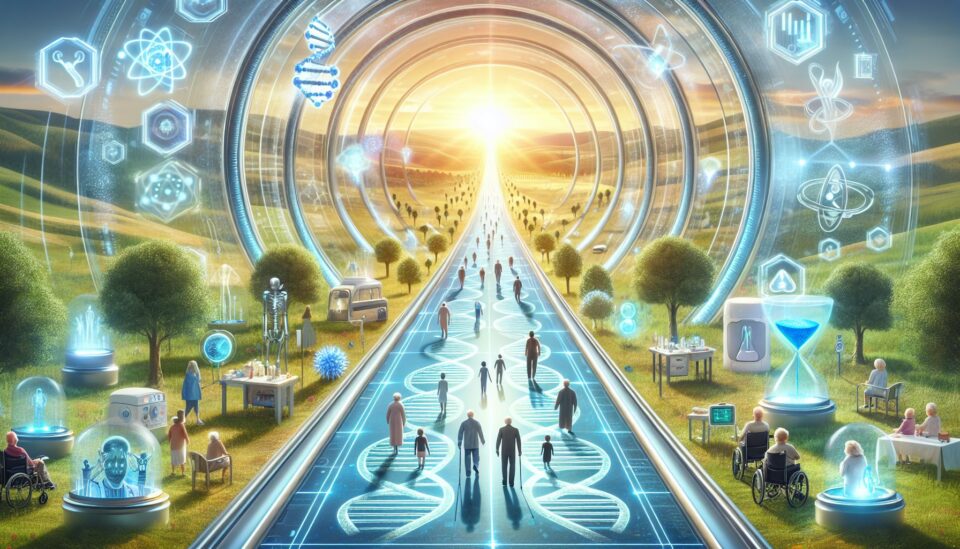
Greetings, tech wizards and innovation enthusiasts! Let’s look at the exciting intersection of longevity and technology. How are these two areas merging together to push the boundaries of human lifespan?
Introduction
We’re living in an age where immortality feels less like a Greek myth and more like something we might actually pull off. And when I say immortality, I’m not talking about vampire crypts or Harry Potter’s Philosopher’s Stone. I’m talking about real science. Hard science. With AI and machine learning advancing at breakneck speed, we finally have the tools to figure out how the human body works. More importantly, we can figure out how to make it work longer. Maybe a lot longer.
The landscape of longevity technology
Longevity technology covers a huge range of fields. Genomics, dietary supplements, machine learning models that predict disease risk. You name it. Startups, tech giants, and biotech firms are all racing toward the same goal: giving us more healthy years of life.
Genomics and genetics: Our genes hold the keys to longevity tech. Researchers have made real progress understanding how genetics affect aging. Projects like the Human Longevity Project, germline engineering, and CRISPR are helping us decode our biological clock piece by piece.
Artificial intelligence and machine learning: These technologies are creating major breakthroughs in longevity research. AI algorithms can crunch through massive datasets and spot patterns humans would never catch. Predictive models can warn you about health risks based on your genetics, lifestyle, and environment. Having that information means you can actually do something about it before problems start.
Digital health and wearables: These devices collect tons of data about our daily habits and vital signs. Combined with AI and machine learning, all that information gives us real-time insights into our health that we’ve never had before.
Techno-utopian vision: The endless dance of life
Cracking the aging code is incredibly difficult. It’s like finding the Holy Grail of biology. But recent breakthroughs in genetics, robotics, AI, and nanotechnology are painting a pretty compelling picture of the future. A future where aging isn’t inevitable but treatable.
Nanomedicine and nanotechnology: Scientists think nanorobots performing cellular repairs could change everything in our fight against aging. These microscopic robots would travel through our bodies, hunt down harmful cells, fix our DNA, and clear dangerous plaques from our arteries.
Gene therapy and genetic manipulation: Recent advances in genetic manipulation, especially with CRISPR, could help us slow or even reverse aging. Gene therapy might let us turn off aging genes or activate genes that preserve youth.
The democratization of longevity tech: Let’s all live longer
The advances are impressive, but here’s the catch: making longevity tech actually work means making it accessible. Biotech, AI, robotics are all sophisticated and expensive. Without serious effort to democratize these technologies, we’ll create a world where only the wealthy get to live longer. That’s a pretty dystopian outcome.
The role of startups: Longevity tech startups are doing some fascinating work. Companies like Unity Biotechnology, AgeX Therapeutics, Elysium Health, and BioAge Labs are developing affordable solutions that might actually reverse aging. What used to be pure science fiction.
Policy implications: Governments need to recognize the potential of these technologies and help make sure everyone benefits. That might mean investing in biotech startups, offering tax incentives to encourage investment, or subsidizing treatments to make them affordable for regular people.
Conclusion
Ever thought about a world where getting old doesn’t mean getting weak? Where each birthday is just another number instead of a step toward inevitable decline? That’s what longevity tech promises. Advances in genomics, AI, and nanotechnology are moving us toward a future where aging becomes optional. But we’re still at the beginning of this journey. The real challenge is making sure these technologies benefit everyone, not just the privileged few.
As philosophers remind us, life is a play where duration matters less than performance. But in a world where technology might let us perform for many more acts, who wouldn’t want to stay on stage a little longer? The path to extreme longevity isn’t quite reality yet, but this audacious journey is uncovering mysteries and possibilities we never thought were achievable.