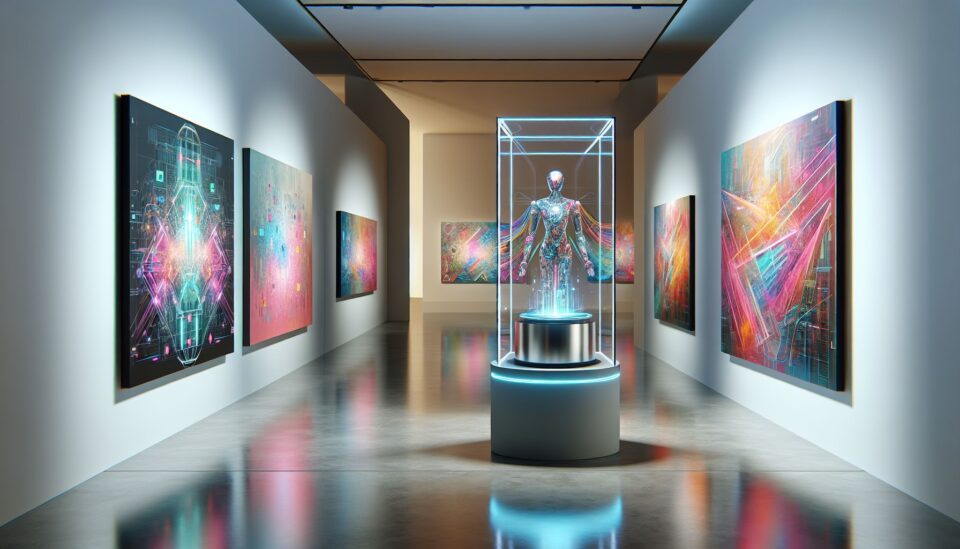
In the growing world of artificial intelligence and new technology, one question keeps coming up: “Who owns what?” This gets really interesting when we’re talking about art created by AI, because it messes with everything we thought we knew about machine learning, creativity, and who gets to claim ownership. Let’s dig into this confusing mess and see what we can figure out.
Introduction – The Intersection of Art and AI
Technology and creativity keep mixing in ways that change how we think about art. AI can now paint copies of famous masterpieces, write poetry, and even compose full symphonies. The line between human creativity and machine-made stuff? It’s getting pretty blurry.
But while we’re all impressed by what GANs (Generative Adversarial Networks), DeepDREAM’s auto-encoding, and other machine learning systems can create, we’re left scratching our heads about who actually owns this AI-made art.
The Quandary of AI Intellectual Property
Here’s where things get messy with intellectual property rights. When an AI creates artwork, who owns it? The AI itself? The programmer who built it? Maybe the person who used it?
The US Copyright Office has been pretty clear: if it wasn’t made by a human, it can’t get copyright protection. No animals, no plants, no machines. But this creates a weird gray area around the software and algorithms behind the art.
Al Algorithm’s Contribution to Art
What happens when an AI creates something completely original without any human touching it up? Can we even call that art? Usually, to get copyright protection, something needs to show creative influence, thought, or intent from whoever made it. That’s a tough standard to apply when the creator is a bunch of code.
Case Studies – Monkey Selfie and AI Composed Music
Remember that “Monkey Selfie” drama? Perfect example right there. A monkey grabbed a photographer’s camera and took its own picture. Everyone argued about who owned the copyright. The court sided with the human photographer because, well, monkeys can’t hold copyrights. But what if we swap that monkey for an AI that shows actual creative skill?
Things get even weirder with AIVA (Artificial Intelligence Virtual Artist), which composed music for a video game. SACEM, Luxembourg’s music rights organization, actually gave AIVA composer credits. But doesn’t that go against the whole “non-humans can’t own copyrights” thing?
The Programmer Factor
We can’t ignore the programmers here. They build the algorithms and set up how they learn, which definitely affects what comes out. Does that make them partners with the AI? Should they get the copyright?
Consideration for the End-user
Then there’s the actual user. They didn’t build the AI, but they’re definitely involved in using it. They pick the inputs, maybe choose what the AI learns from, and tweak the settings. If the final artwork depends mostly on what the user decided, shouldn’t they get to claim it?
Looking Forward – New Legal Framework Needed
Here’s the thing: our legal system for AI-created art is basically still in diapers. Copyright laws were written for humans, and now AI is creating stuff that challenges everything.
Updating copyright laws for AI work isn’t going to be easy. We need to balance encouraging both human and AI creativity while making sure people can still access and use this growing collection of human and machine-made art.
Conclusion – Embracing the Gray Area
AI and art together are forcing us to rethink what creativity and authorship even mean. As machine learning gets better at making art, we have to deal with legal and ethical questions nobody saw coming.
Maybe instead of trying to draw hard lines about ownership right now, we should just accept that things are messy. Let’s keep talking about it and let AI art keep evolving. This whole question about AI ownership rights is just getting started. As AI gets smarter, our understanding and rules will have to keep up. It shows we can adapt when new technology throws us curveballs.