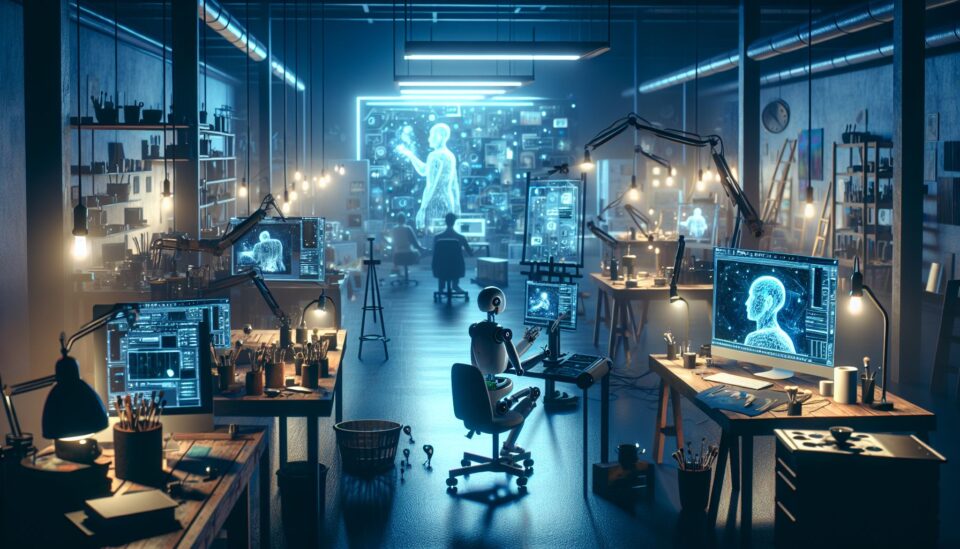
As a tech enthusiast who gets way too excited about new innovations, I’ve been completely fascinated by something lately: AI making art. We’re talking AI-generated paintings from OpenAI, computer-composed symphonies, even novels written by algorithms. These developments are tearing down the wall between human creativity and machine logic. I figured it was time to dig into this weird, wonderful world where artificial intelligence meets the arts. Grab some coffee, this is going to be interesting.
Bridging the Cultural Code
The jump from “robots have no soul” to “wait, did AI just make something beautiful?” didn’t happen overnight. It’s been a slow, fascinating process that’s still unfolding.
One of my favorite examples is Google’s Project Magenta. This team uses machine learning to create music, videos, images, and text, all of it. The results? Songs and artwork that actually make you stop and think. They’re basically proving that artistic creation can be baked right into AI systems. Like I always tell people, “Turns out technology really does have rhythm!”
Artists or Art-ficial Intelligence?
Art has always been our thing, right? Human creativity, human expression, human soul poured onto canvas or into music. But machines are challenging that assumption. AI can write poetry now. It can paint in Van Gogh’s style. Sometimes it even does it better than we do.
But here’s what kept me up one night: is AI actually creating art, or just really good at copying patterns and spitting out something that looks creative? Can a machine truly experience the creative process?
I’ve spent time playing with OpenAI’s art generator, and honestly? These questions don’t have simple answers. Sure, the AI doesn’t feel the emotional weight behind each brushstroke or musical note, at least not in any way we understand. But the end result is still innovative art that looks fresh and moves people.
Maybe it doesn’t matter if the artist was human or machine. If the art makes you think, makes you feel something, and satisfies that need for beauty, does the source really change its value?
The Fourth Industrial Revolution, A Melting Pot of Art and AI
This isn’t happening in some hidden lab anymore. The Fourth Industrial Revolution is pushing AI into creative arts right into the spotlight. We’re entering an era where artificial intelligence becomes part of how we express ourselves.
Elon Musk’s Neuralink could completely change how we make art, letting us create through direct brain-computer interfaces with AI assistance. We’re just scratching the surface of what AI can do creatively. There’s so much left to explore and discover.
Future: A Beautiful Conundrum
I can’t help wondering what comes next. Will we see AI-composed symphonies on Billboard charts next to human artists? Could there be an AI version of Starry Night hanging in galleries? Will students analyze AI-generated poems in English Literature classes?
The mixing of AI and creative arts is exciting territory, but it’s also complicated. It challenges everything we thought we knew about creativity and whether it belongs only to humans. We’re standing at the edge of something big here. One thing I’m sure of: AI is already woven into our culture and how we express ourselves, and it’s eager to help shape what comes next.
So as we wrap up this late-night conversation, here’s something to chew on: can creativity be programmed, and if it can, is it still really creativity? Whether it’s AI writing like Shakespeare or composing like Beethoven, it gives us a lot to think about. It’s past midnight, the coffee’s gone cold, but this conversation about AI in the arts? It’s just getting started. Until next time, keep questioning, keep exploring, and remember that even as the line between human and machine gets blurrier, art itself remains powerful.