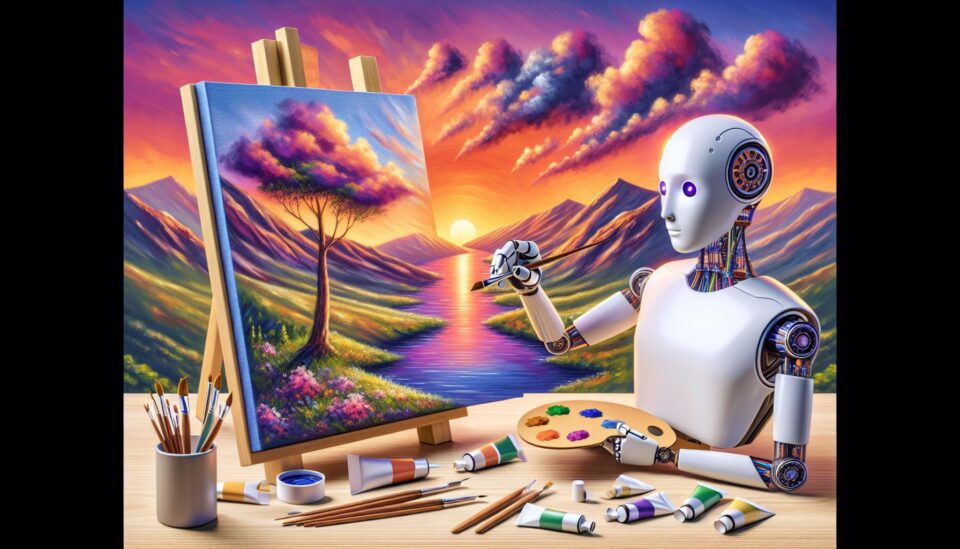
Hey there tech aficionados, let’s talk about something I personally find fascinating: the intersection of art and artificial intelligence. Not that long ago, the idea of AI creating art was pure science fiction. Fast forward to today, and AI has made itself right at home in the art world—and honestly, it gets more interesting every day!
AI: The Weird Kid Who Turned Out to Be Brilliant
When most people think of AI, they picture autonomous drones or those voice assistants that cheerfully tell you the weather—shout out to Siri and Alexa! But AI is way more than our helpful, voice-controlled sidekicks.
It’s like that kid who keeps getting smarter every day, learning new things, mastering skills, and showing off talents that keep catching us off guard. And now this digital prodigy has gotten into art—a field we’ve always thought belonged to human creativity and soul. Let’s just say it’s causing quite the stir.
AI in Art: A Whole New Toolbox
The romance between AI and art started a bit late to the party, but I’ve got to tell you, it’s been worth the wait. The field of AI art explores what happens when you give artificial intelligence creative freedom, using everything from machine learning to neural networks.
One of my artist friends joked, ‘hope these AI artists aren’t planning on starving in garrets for their art too.’ Fat chance! But there’s something both amazing and slightly unsettling about algorithms that can now create genuinely beautiful work.
Take the portrait of Edmond de Belamy, which sold for a jaw-dropping $432,500 at Christie’s (it started with an estimate of just $10,000!). This computer-generated piece was made by an AI model created by a group of French students calling themselves Obvious. The wild part? The AI had never seen a single image before creating this masterpiece. Talk about natural talent!
So, How Does AI Actually Make Art?
Alright, I can feel the curiosity radiating from our tech-loving community. How exactly is AI pulling this off? The process reminds me of a kid learning to ride a bike, but with way more math involved.
Let me break it down. Ever heard of Generative Adversarial Networks (GANs)? These are neural networks trained to produce art. Basically, you have one neural network—the ‘Generator,’ which creates images, and another—the ‘Discriminator,’ which judges those images. It’s a constant cycle of creation and critique.
Picture AI as an eager art student with the enthusiasm of a kid and the processing power of a supercomputer. Feed it an art history textbook and it starts recognizing patterns, gradually developing its own artistic style. What’s fascinating is how it embraces trial and error—a core part of any creative process. The result? An artist that never gets tired, never sleeps, and always keeps learning.
AI Art: Stirring Up Some Drama
Like any major shift, AI art has sparked plenty of controversy. Many artists worry about being replaced or made obsolete by algorithms. Others question whether AI can truly create art since it lacks human emotions, intentions, and life experiences.
Sure, AI art currently depends heavily on humans—from designing algorithms to picking the final pieces. But let’s be real, most of our greatest inventions started out completely dependent on us too. Remember when cars needed someone to walk in front with a flag?
What’s Next for AI in Art
Looking ahead, I’m fascinated by how the lines between physical, digital, and biological keep blurring. Picture artists using neural interfaces to channel their creativity directly into an AI, or AI generating artwork on virtual canvases and 3D printing them instantly.
The possibilities are mind-blowing, really only limited by what we can dream up. I think we’re standing at the edge of something big in the marriage of technology and human creativity—where AI becomes a way to push our imagination to its absolute limits.
For all the skeptics out there, here’s my take: don’t write off AI as just a copycat. Think of it as a tool that can stretch the boundaries of what human creativity can achieve. Like always, it comes down to how we choose to use this technology and make it work for us.
Only time will tell how this fascinating relationship between AI and art will play out. But for now, fellow tech enthusiasts, let’s enjoy this wild ride and appreciate the incredible work that’s already coming our way!
Until the next exciting development in the tech world—stay curious, stay creative.